Wander Slow, See More: Göteborg’s Architectural Soul Unfolded
Have you ever walked through a city and felt like the buildings were whispering stories? That’s exactly what happened in Göteborg, Sweden. I took my time—no rush, no checklist—and let the streets guide me. From 19th-century merchant houses to sleek Nordic modernism, every corner revealed a new layer of design and history. Slow travel isn’t just about pace; it’s about presence. And in this coastal gem, architecture becomes a language all its own. More than a backdrop, the city’s structures speak of resilience, innovation, and quiet beauty. For travelers who value depth over distance, Göteborg offers a rare chance to connect with a place through its built environment—one thoughtful step at a time.
Why Göteborg? The Allure of a Coastal Scandinavian City
Situated on Sweden’s west coast where the Göta River meets the North Sea, Göteborg is a city shaped by water and wind. Founded in the early 17th century as a fortified trading post, it grew into one of Scandinavia’s most important ports, a role that continues to influence its character today. Unlike the grand formality of Stockholm or the cosmopolitan buzz of Copenhagen, Göteborg exudes a grounded charm. It’s a mid-sized city—large enough to offer cultural richness, yet small enough to navigate on foot or by bicycle. This balance makes it especially appealing to travelers seeking authenticity without the crowds.
Göteborg’s maritime heritage is visible in its layout and architecture. The original grid of canals and fortifications still defines parts of the city center, and the harbor remains a living, working space rather than a sanitized tourist attraction. Fishing boats dock beside modern ferries bound for Denmark and Germany, and the scent of salt and diesel lingers in the air. This functional beauty, where utility and design coexist, sets the tone for the city’s architectural narrative. The buildings here were not created for show, but for purpose—yet over time, they have acquired a quiet elegance.
Compared to other Nordic capitals, Göteborg sees fewer international tourists, which allows for a more immersive experience. There’s less pressure to perform, less commercialization of culture. Shops are locally owned, cafes serve fika without fanfare, and public spaces feel lived-in rather than curated. For the slow traveler, this means space to breathe, to observe, and to form genuine connections. Whether sitting on a bench watching seagulls circle above the harbor or chatting with a shopkeeper about the history of their neighborhood, the city invites participation rather than passive observation.
Its size also makes it ideal for unhurried exploration. You can walk from the historic district to a modern cultural hub in under thirty minutes, experiencing centuries of architectural evolution in a single afternoon. There’s no need to rush from one landmark to the next; instead, you can linger in courtyards, notice the way light falls on a brick façade, or follow a narrow alley simply because it looks intriguing. Göteborg rewards curiosity, and its layered urban fabric unfolds best when approached with patience and presence.
The Philosophy of Slow Travel: Seeing Beyond the Surface
Slow travel is not merely about moving at a leisurely pace; it’s a mindset rooted in mindfulness and deep engagement. It means resisting the urge to tick off attractions and instead allowing yourself to be guided by the rhythm of a place. In Göteborg, this approach transforms a simple walk into a sensory journey. When you slow down, details emerge—the curve of a wrought-iron railing, the texture of weathered wood, the way a building’s shadow shifts across the street as the sun moves. These subtle elements, often overlooked on a hurried tour, are where architecture truly comes alive.
The benefits of this deliberate pace extend beyond aesthetics. By spending more time in fewer places, travelers develop a stronger emotional connection to the environment. They begin to notice patterns: how certain materials repeat across neighborhoods, how building heights change near parks, or how public art integrates with architecture. In Göteborg, such observations reveal a city that values harmony, functionality, and sustainability. The absence of skyscrapers, the abundance of green spaces, and the emphasis on walkability all reflect a long-term vision for urban living.
One of the most profound shifts that comes with slow travel is the change in perception. When you’re not racing to the next destination, your senses sharpen. You start to hear the city—the hum of trams, the creak of old wooden floors in a café, the distant call of a ship’s horn. You begin to feel the climate in the design: thick walls that retain heat, overhangs that shield from rain, large windows that capture every available ray of sunlight during the short winter days. Architecture ceases to be static; it becomes responsive, almost alive.
Letting go of rigid itineraries also opens the door to serendipity. A missed tram might lead you to a hidden courtyard with blooming flowers. A sudden rainstorm could send you into a centuries-old bookstore where the owner shares stories about the building’s past. These unplanned moments often become the most memorable parts of a journey. In Göteborg, where the urban fabric is dense with history and character, slowing down doesn’t mean doing less—it means experiencing more, deeply and meaningfully.
Old Town Whispers: Exploring Göteborg’s Historic Core (Gamla Stan)
At the heart of Göteborg lies Gamla Stan, a neighborhood that preserves the city’s 17th-century origins. Though smaller than Stockholm’s Old Town, it carries a distinct atmosphere—one of intimacy and resilience. The area was originally laid out in a strict grid, a design influenced by Dutch urban planning, reflecting the strong commercial ties between Sweden and the Netherlands during the city’s early years. Walking through Gamla Stan today, you can still trace the original street pattern, with narrow lanes branching off the main thoroughfares like veins in a leaf.
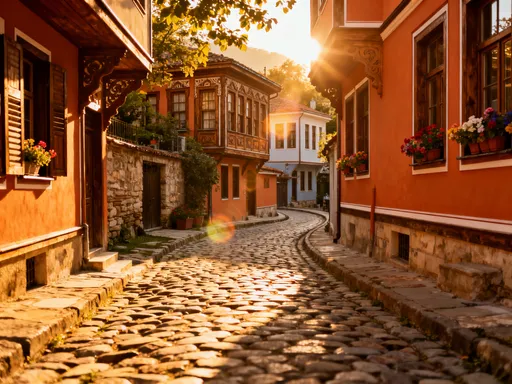
The buildings here are a blend of reconstruction and preservation. Many were rebuilt after fires in the 18th and 19th centuries, but they retain the stylistic elements of their time. Along Västra Hamngatan, rows of Dutch-inspired merchant houses stand shoulder to shoulder, their gabled roofs and tall, narrow windows evoking a bygone era of trade and craftsmanship. The facades are often painted in soft ochre, gray, or sage green, colors that harmonize with the muted Scandinavian light. These structures were not built for grandeur, but for practicality—shops on the ground floor, living quarters above, and storage in the attics.
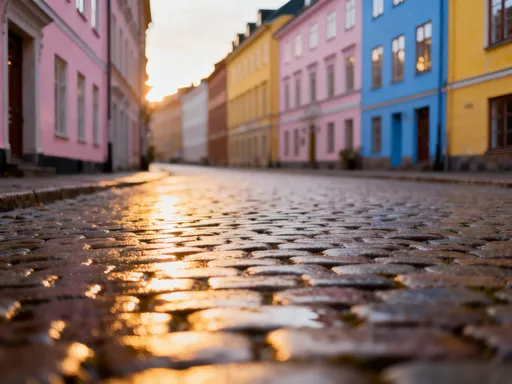
What makes Gamla Stan particularly special is the attention to detail. Doorways are framed with carved stone or wood, some bearing the initials or dates of former owners. Window frames are painted in contrasting colors, adding subtle personality to each building. Even the cobblestones underfoot have a story; some are uneven from centuries of use, others replaced during careful restoration efforts. These imperfections are not flaws—they are marks of time, evidence of a city that has lived and adapted.
Preservation in Göteborg is not about freezing a place in time, but about allowing it to evolve while honoring its past. Many historic buildings now house boutique hotels, artisan bakeries, or design studios. A former customs house might contain a modern art gallery, its original vaulted ceilings preserved beneath contemporary lighting. This adaptive reuse ensures that Gamla Stan remains a living neighborhood, not a museum exhibit. Residents still live here, children walk to school along the same paths their ancestors did, and the rhythm of daily life continues amidst the echoes of history.
Nordic Modernism: Function Meets Beauty in Post-War Design
While Gamla Stan speaks to Göteborg’s past, the city’s post-war architecture reflects its forward-looking spirit. The mid-20th century saw a wave of modernist development across Sweden, driven by a national commitment to social welfare, equality, and functional design. Göteborg embraced this movement with enthusiasm, constructing entire neighborhoods of clean-lined apartment blocks, public schools, and community centers. These buildings, though often modest in appearance, embody a deep respect for human needs—light, space, simplicity, and access to nature.
Nordic modernism in Göteborg is not about austerity, but about clarity. The lines are straight, the forms geometric, yet there’s warmth in the materials—red brick, pale wood, and large panes of glass that invite the outside in. Balconies are designed to catch the sun, stairwells are flooded with natural light, and communal courtyards provide green oases within dense urban areas. One need only walk through districts like Vasastan or Örgryte to see how modernism was tailored to the northern climate, maximizing daylight and creating shelter from wind and rain.
Public housing projects from this era, such as those in the Lindholmen area, were not afterthoughts but carefully planned environments. Architects worked closely with city planners to ensure that every resident, regardless of income, had access to quality living conditions. These developments included playgrounds, laundry rooms, and shared spaces for socializing—features that reinforced community bonds. The aesthetic was never flashy, but it was deeply democratic: beauty was not reserved for the elite, but woven into the fabric of everyday life.
Today, many of these mid-century buildings are celebrated for their enduring functionality and quiet elegance. Renovations focus on energy efficiency and sustainability, updating insulation and windows while preserving the original design intent. The result is a cityscape where old and new coexist seamlessly. A 1950s apartment block might stand beside a restored 18th-century warehouse, each contributing to a diverse yet coherent urban identity. In Göteborg, modernism is not a relic of the past—it’s a living philosophy that continues to shape how people live and interact with their environment.
Industrial Heritage Reborn: From Factories to Cultural Spaces
Göteborg’s identity as an industrial powerhouse is etched into its skyline. For over a century, the city thrived on shipbuilding, manufacturing, and trade, with factories and warehouses lining the riverbanks. As global markets shifted and industries declined, many of these structures faced demolition. Instead, Göteborg chose a different path—adaptive reuse. Rather than erase its industrial past, the city transformed it into a foundation for cultural and creative renewal.
The Haga district, once home to breweries and workshops, is now one of Göteborg’s most beloved neighborhoods. Cobblestone streets wind past repurposed brick buildings housing cozy cafés, vintage shops, and craft breweries. The architecture retains its industrial character—exposed beams, arched windows, heavy wooden doors—while serving new purposes. A former factory might now contain artist studios, where natural light floods through skylights originally designed for assembly lines. This blend of old and new creates a sense of continuity, as if the city’s creative energy has simply shifted form.
Lindholmen, once a shipyard and industrial zone, has undergone a remarkable transformation into a hub for innovation and education. Old workshops now house research labs, tech startups, and university programs focused on sustainable urban development. The architecture here merges industrial strength with modern transparency—steel frames support glass walls, allowing visibility and collaboration. Public spaces are designed to encourage interaction, with open plazas, bike paths, and waterfront seating. The area exemplifies how urban regeneration can be both respectful of history and forward-thinking in function.
One of the most inspiring examples is the conversion of former storage warehouses into cultural institutions. A disused grain silo might become a contemporary art museum, its raw concrete walls providing a striking backdrop for exhibitions. Another building could house a music school, where the acoustics of the original structure enhance the learning environment. These projects are not just about saving buildings—they’re about preserving memory while creating space for new ideas. In Göteborg, the past is not discarded; it is reinterpreted, ensuring that the city’s industrial soul remains visible in its modern skin.
Green Spaces and Urban Planning: Where Nature Meets Architecture
One of Göteborg’s defining features is its integration of nature into urban life. From expansive parks to tree-lined boulevards and quiet canals, green spaces are not afterthoughts but essential components of the city’s design. This commitment to balance between built and natural environments reflects a long-standing Scandinavian value: that well-being depends on access to fresh air, sunlight, and open space. Nowhere is this more evident than in Slottsskogen, a 137-hectare park that has served as Göteborg’s green lung since the 19th century.
Slottsskogen is more than a recreational area—it’s a carefully planned ecosystem that supports biodiversity while offering residents a place to walk, cycle, picnic, or simply sit in silence. The park is bordered by residential neighborhoods designed with similar principles in mind. Tree-lined streets, low building heights, and shared courtyards ensure that even in dense areas, people live close to nature. Architects often orient buildings to maximize views of greenery, and many apartments include balconies or terraces for growing plants. This seamless blending of urban and natural elements creates a calming, human-scale environment.
The city’s commitment to sustainability extends to its infrastructure. Göteborg has one of the most extensive bicycle networks in Scandinavia, with dedicated lanes, secure parking, and traffic signals timed for cyclists. Pedestrian zones in the city center limit car access, making streets safer and quieter. These choices influence architectural design—buildings are oriented toward walkable streets, ground floors are designed for retail and social activity, and public transit hubs are integrated into mixed-use developments. The result is a city that prioritizes people over vehicles, fostering a slower, more connected way of life.
New construction projects continue this tradition. Modern apartment complexes incorporate green roofs, solar panels, and rainwater harvesting systems. Public buildings are designed to meet high environmental standards, reducing energy consumption and carbon emissions. Even in redevelopment areas, planners ensure that mature trees are preserved and new green spaces are created. In Göteborg, sustainability is not a trend—it’s a foundational principle that shapes how the city grows and evolves.
Hidden Details: The Quiet Beauty of Everyday Buildings
While grand landmarks often capture attention, Göteborg’s true architectural magic lies in the ordinary. It’s in the way a staircase curves inside an old apartment building, the pattern of tiles in a doorway, or the color of a window frame chosen to catch the morning light. These details are not accidental; they reflect a culture that values care, craftsmanship, and quiet beauty. For the attentive traveler, noticing them becomes a form of meditation—a way to slow down and appreciate the artistry in everyday life.
Residential streets in neighborhoods like Linné or Kärra reveal a palette of soft pastels—mint green, dusty rose, pale yellow—applied to façades with a light touch. These colors do more than decorate; they soften the urban landscape, especially during the gray months. Ornamental ironwork on balconies and gates adds another layer of character, with floral motifs and geometric patterns that hint at historical influences. Even mundane elements like mailboxes or street lamps are designed with thought, contributing to a cohesive visual language.
Local materials play a crucial role in this continuity. Red brick, sourced from regional clay, dominates the city’s architectural vocabulary. Timber, another traditional material, appears in window frames, doors, and interior finishes. These choices create a sense of place—Göteborg doesn’t look like any other city because its buildings are rooted in local resources and climate. The repetition of these materials across decades and styles produces a visual harmony that is both subtle and powerful.
Encouraging travelers to notice these details is not about turning everyone into an architect. It’s about cultivating a habit of seeing—of looking closely, of asking questions, of appreciating the effort behind even the smallest design choice. In Göteborg, where the pace of life supports reflection, this kind of awareness comes naturally. A bench by a canal, a sunlit courtyard, a well-worn handrail—all become invitations to pause and connect with the human stories embedded in the built environment.
Conclusion: Architecture as a Living Story
Göteborg’s buildings do more than shelter people—they tell a story. A story of a city shaped by water and trade, rebuilt after fires, transformed by industry, and renewed through creativity and care. Each architectural layer—17th-century gables, 19th-century merchant houses, 20th-century modernism, 21st-century sustainability—adds to a narrative of resilience and adaptation. To walk through Göteborg is to read this story not in books, but in brick, wood, glass, and light.
Slow travel allows us to listen. It strips away the noise of checklist tourism and lets us engage with a place on a deeper level. In Göteborg, this means noticing how a doorway was designed for both beauty and function, how a park connects neighborhoods, or how a former factory now nurtures artists. These observations foster a sense of belonging, even for a visitor. They remind us that cities are not static—they are living, breathing entities shaped by generations of choices.
For the thoughtful traveler, especially one who values depth, authenticity, and quiet beauty, Göteborg offers a profound experience. It invites you to walk slowly, to look closely, and to let the city speak. You don’t need a guidebook to understand it—just curiosity and time. And in that space of presence, architecture ceases to be mere background. It becomes a conversation—one that continues with every step you take.